

Faced with climate change, north-western Europe is seeking to safeguard its forests. Repeated droughts, pests, and widespread dieback are severely affecting iconic tree species such as beech and Norway spruce. In Belgium, where nearly 60% of stands rely on species considered vulnerable, the urgency is now tangible.
It is in this context that MigFoRest was born — an Interreg project (2024–2028) led by the Société Royale Forestière de Belgique and French, German, and Belgian partners. The objective is to deploy assisted migration at scale across north-western Europe: an approach consisting in deliberately accelerating the displacement of provenances or species towards areas where they will be more resilient. The project distinguishes between provenance migration, aimed at strengthening the genetic diversity of local species, and species migration, which supports the natural range expansion of European tree species.
Seven pilot territories have been selected in Belgium, France, and Germany, including two in Wallonia, in the Condroz and the southern Ardennes. A method for selecting planting sites within these territories has been developed, taking into account site conditions and resilience criteria (diversity, vulnerability, connectivity).
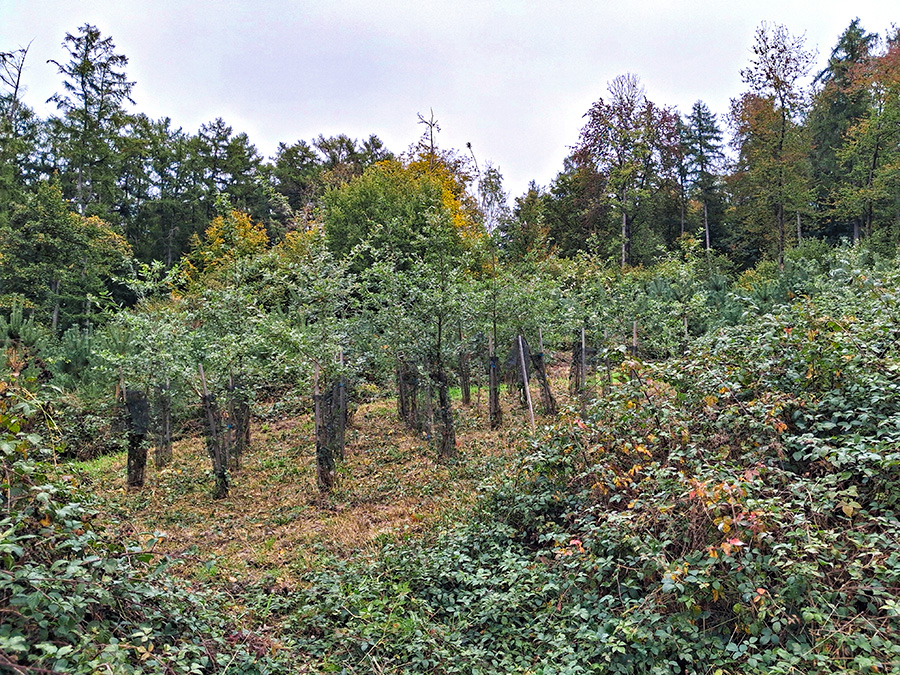
Thirty-four European species have been selected, distributed across three tiers according to their priority and availability, with assessment of invasive risk and ecological potential. Provenance selection is based on a detailed analysis of future climate analogues specific to each territory. For priority species, a study of genetic diversity will ensure sufficient variability. Several seed orchards will be established to secure a future supply of adapted seed material.
MigFoRest thus constitutes an integrated, scientific, and operational approach that complements increased reliance on natural regeneration, continuous cover forestry (CCF), and species diversification, with the aim of sustainably strengthening the resilience of European forests.