
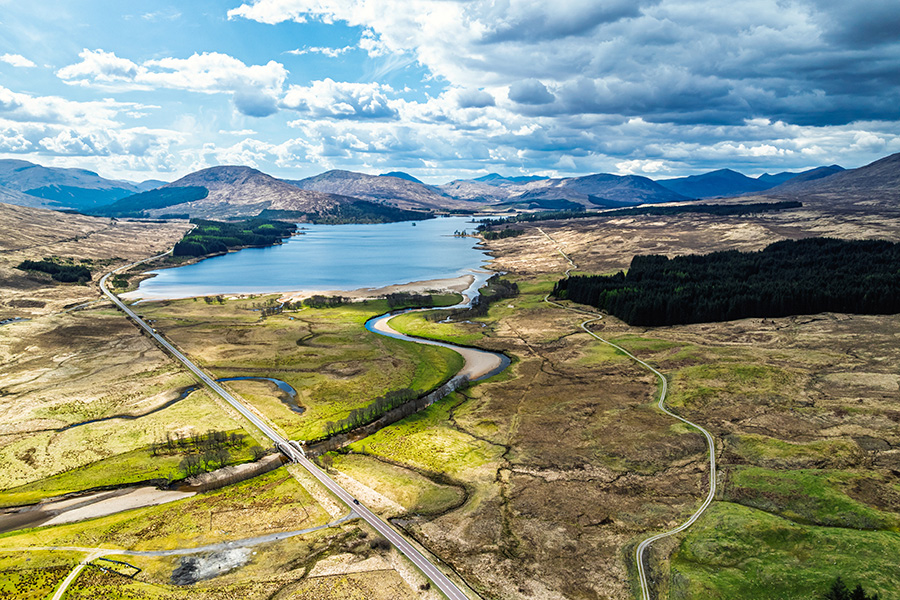
How can the promotion of indigenous languages and the protection of the environment be interrelated? These two issues converge in Scotland, where activists are mobilising to preserve Gaelic place names and resist their erasure and anglicisation. Traditional languages, in fact, carry the memory of territories that must be preserved and, where necessary, restored. According to the government agency NatureScot, the Caledonian Forest – Scotland’s primeval forest ecosystem – now covers only 4% of its historical extent, a direct consequence of the Highland Clearances of the 18th century, which simultaneously dismantled the indigenous clan system and triggered widespread deforestation in favour of sheep farming and recreational hunting.
Meanwhile, today Gaelic is spoken fluently by only 2.5% of the Scottish population. Linguists and environmentalists are now exploiting Gaelic toponyms as a proxy for historical vegetation cover. In 2024, the Forgotten Woodlands project catalogued 15,000 place names associated with the former presence of trees, mapped against landscapes that are currently devoid of any tree cover. These data represent a scientific basis for targeting reforestation zones, or indicate ecological continuity in cases where the historical name still reflects current on-the-ground conditions. For its part, the association Trees for Life is drawing on this toponymic memory in its rewilding project launched in 2023 on the Dundreggan estate. A nursery of native tree species has been established there, with the aim of replanting 4,000 hectares of forest.