

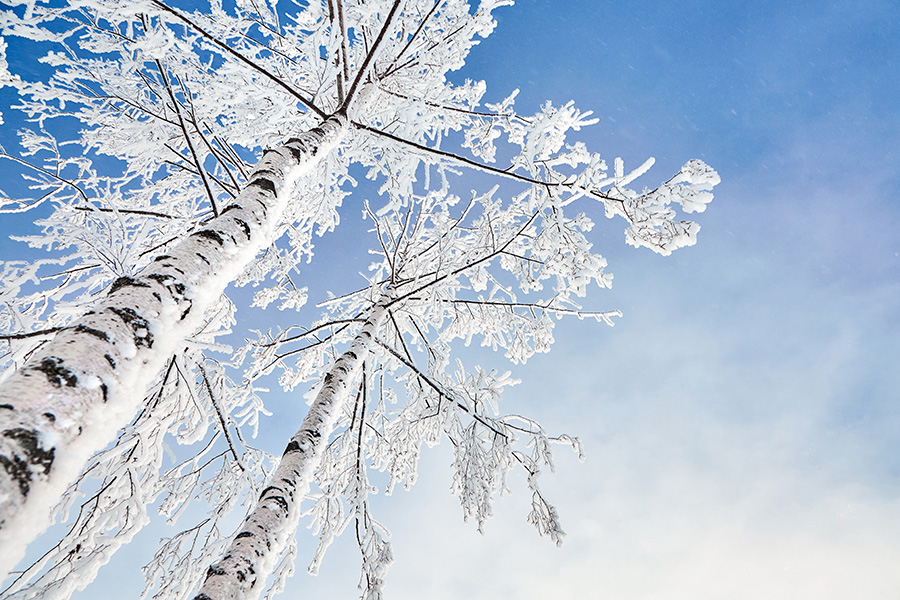
The bark of Silver Birch (Betula pendula) has a set of morphological and biochemical characteristics whose functions — sometimes still debated — appear to respond to multiple selective pressures.
At the structural level, the bark sheds periodically, which is thought to eliminate encrusting parasites and lichens. In doing so, winter sunlight can reach the cork layers of the inner bark, where low-level but indispensable photosynthetic activity that supports the spring bud burst takes place.
The characteristic white colour of the bark is attributed to betulin, a molecule that forms crystalline deposits and reflects the entire visible light spectrum. A thermal hypothesis stipulates that this reflection would attenuate warming of the cambium in winter, thereby limiting freeze-thaw cycles potentially harmful to conducting tissues. This interpretation is challenged, however, by the observation that the twigs and young shoots of the birch display a brownish to reddish bark. An alternative, non-exclusive hypothesis attributes the whiteness of the bark to a defensive function against herbivores. The contrast between the white surface and the dark lenticels of the bark would facilitate the detection of phytophagous insects by predatory birds. Furthermore, the smooth surface is thought to slow or prevent the progression of caterpillars and other invertebrates.
The white colour of Betula is also thought to have provided effective camouflage against a now-extinct megafaunal herbivore community far more inclined to strip bark than present-day ruminants, in snow-covered landscapes. Finally, betulin itself is thought to inhibit digestion in certain herbivores, while the horizontal orientation of the deep bark layers and their strong adhesion constitute an effective mechanical protection against bark stripping.