

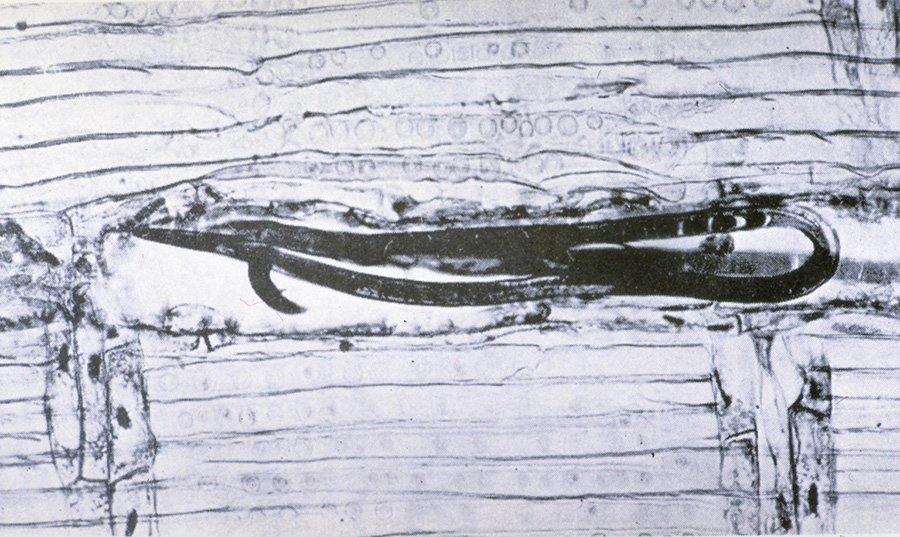
The situation in south-western France is critical after the first confirmed outbreak of the pine wood nematode (Bursaphelenchus xylophilus) in France on 3 November 2025 in Seignosse (Landes). This priority quarantine organism attacks maritime pines and other conifers, causing vascular blockage and rapid tree mortality. The pest spreads locally via the beetle Monochamus galloprovincialis, an insect vector widely present in the south-west of France.
This detection, although feared since the nematode became established and spread in Portugal in the late 1990s, highlights the vulnerability of specialised forest production systems to the introduction of harmful organisms.
To limit the spread, which could reach the scale of several hundred thousand hectares observed in southern Europe, a prefectural decree has established a ‘restricted zone’ (20 km) encompassing 56 municipalities, as well as an ‘infested zone’ of 500 metres around contaminated trees.
The eradication measures are drastic:
- Suspension of activity: all forestry work (felling, skidding, etc.) on susceptible conifers is suspended in the restricted zone, directly impacting operations.
- Eradication in the infested zone: all susceptible plants in the infested zone must be felled.
- Regulation of flows: the movement and removal of unprocessed wood and bark is prohibited, unless the wood is heat-treated.
These emergency measures are paralysing the timber industry by suspending forestry work and operations, seriously impacting professionals such as carpenters and joiners. Concern is particularly high as the holiday season approaches, as it is blocking the delivery and transport of Christmas trees to shops and individuals in the affected area.
Intensive health monitoring, involving technicians and technical sales representatives, can last up to four years. This critical episode highlights the need to rethink the adaptation of forests to climate change, not only through drought resistance, but also through increased diversification of stands to make the landscape more complex and reduce the risk of future spread.